

Collecting stamps can never be more fun when you know what postage stamp you are collecting. So you want to become an expert philatelist? Learning how to identify old postage stamps like a pro is the best way to go!
Postage stamp identification is a crucial aspect in basic or technical philately as it studies the initial stamp design process, the stamp paper, stamp printing methods, stamp gum, stamp perforation, stamp overprints and especially the identification of fakes, forgeries and error stamps.
Stamp collectors especially beginners need a stamp identification guide in order for them to place their postage stamps in their proper places inside the stamp albums.
To identify a postage stamp, it is imperative that you prepare the basic stamp collecting tools needed such as: stamp tongs, magnifying glass, watermark trays and fluids, and stamp catalogues.
Stamp tongs are very essential because it can hold the stamps without causing damage, crease, or getting skin oils on them.
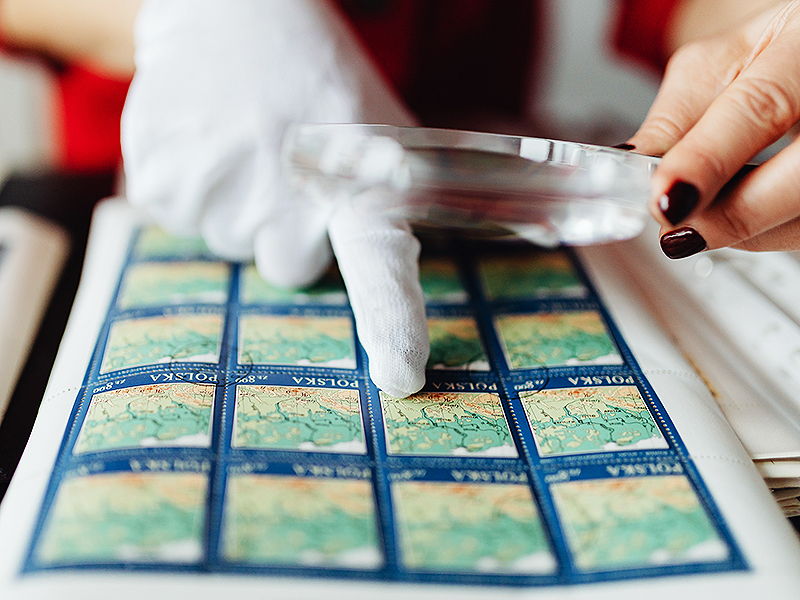
Magnifying Glass is used to aid in identifying the stamp as it enlarges the small text and details on the postage stamp.
Watermark detectors like the watermark tray and fluid will help identify marked paper.
Stamp catalogues provides detailed information on postage stamps and will help in stamp identification. Stamp collecting albums is also handy as stamp values reference.
Tips on how to identify old postage stamps
Find the country and date of issue. Majority of the stamps manufactured or produced has the name of the country and date of issue printed on them. In this case, you can browse through the stamp catalogues, under the country’s name. For US postage stamp identification, the Scott catalogue can be used or try to search online.
Examine for an inscription. Some postage stamps do not have the country or currency imprinted on them; postage stamps have inscriptions. This will help identify the country of origin and currency used.
An example, if an inscription says “A Certo” the country of issue for this inscription is Peru. You can also search for these inscriptions on the internet and try to search for sites with stamp finders.
Pay attention to stamp watermarks. Various characters such numbers, letters, or symbols are sometimes imprinted on the stamp paper. These characters are rarely visible with the naked eye; however it can be detected with the use of a watermark fluid. To do this, place your stamp face down into the watermark tray and add a few drops of fluid. You can use Ronsonol as this fluid dries slowly and will give you ample time to study the postage stamp.
Watch out for unusual stamp prints. Some stamps appear to be similar, but in reality they have small differences. Most of these differences are hardly noticeable and a magnifying glass is often required in order to view. This kind of postage stamp is usually categorized into types.
For example, the first type of a postage stamp may have a framing line on all sides of the stamp, while the second type will only have one framing line located at the bottom. In this case, it is better to consult a comprehensive identifier chart such as the Scott’s Standard Postage Stamp Catalogue or the H.E. Harris & Company U.S. Stamp Identifier.
Identify the stamp’s catalogue number. Once the country of origin has been found and watermarks have been checked, you can now identify the stamp’s catalog number.
To find the catalogue number, you can use the “Scott Catalog Numbers” which lists all the US postage stamp identification. Search for your stamps’ image under the country heading; below the illustration is a list which contains a variety of the stamp. With the information acquired from the list, choose the stamp’s variety and find the catalogue number.