

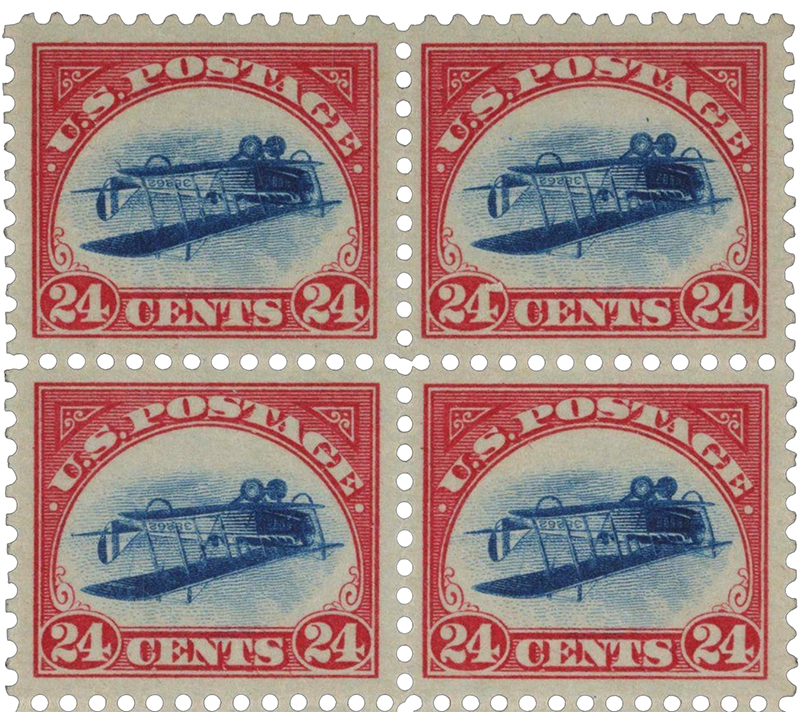
“What are the rarest stamps in the world?” This is one of the most frequently-asked questions by both budding stamp collectors and those in possession of inherited albums or stacks of stamps.
We list 23 of the rarest and most valuable of all stamps ever printed. In postage stamp collecting, rarity significantly increases the value of old stamps.
One Penny Black – the first stamp in the world
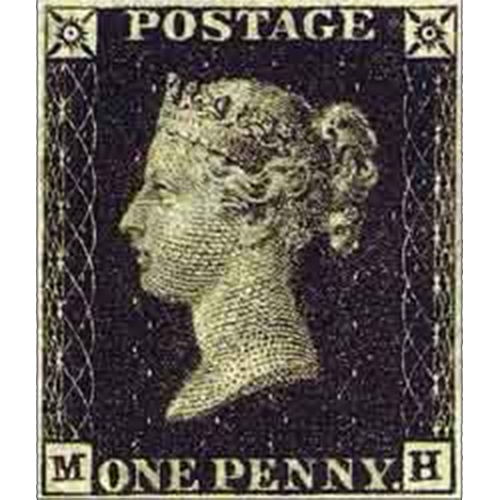
What better way to start than by paying homage to the first stamp in the world, the One Penny Black stamp. First issued in 1840 by the British, the One Penny Black features the bust of England’s Queen Victoria.
Early printing of these old postage stamps were attached and had to be cut with scissors. Today, unused Penny Black stamps are very rare to find. You are in luck if you find one as stamp collectors aspire to have this vintage stamp in their rare stamp collection.
The current market value of an unused One Penny Black stamp is around $3, 000 US Dollars.
List of the top rarest stamps:
Some but not all of the old rare stamps are commonly error stamps. These are the famous and very rare stamps of the world today.
1.) The Two Penny Blue Stamps (1840)
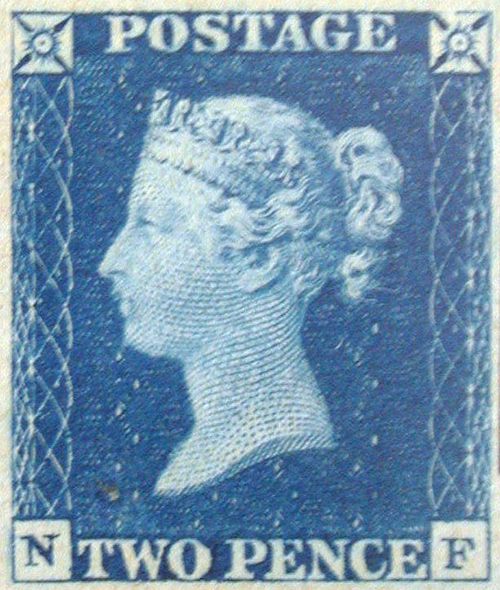
The Two Penny Blue stamp was a postage stamp issued by the United Kingdom of Great Britain and Ireland in 1840. It was one of the first stamps issued by the country, along with the One Penny Black stamp, and was part of a series of stamps known as the “Penny Blacks and Twopence Blues”. These postage stamps lacked the country’s name. One of the earliest stamps made in Britain.
The Two Penny Blue stamp featured the profile of Queen Victoria, who had ascended to the throne the previous year. The stamp was blue in color, and was used for letters weighing up to one ounce that were being sent to destinations within the United Kingdom.
The Two Penny Blue stamp was not as widely used as the One Penny Black stamp, as fewer letters were sent at the higher rate. However, it is still a highly sought-after stamp among collectors today, and is considered a valuable piece of postal history.
These rare British stamps, also know as the Blue Penny postal stamps, were sold for nearly $4 million in 1993.
2.) The ‘Mauritius Post Office Error’ Stamps (1847)
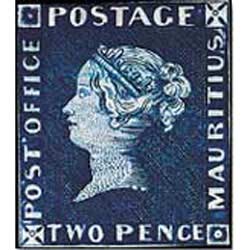
The “Mauritius Post Office Error” stamps, also known as the “Post Office Mauritius” stamps, are a series of postage stamps issued by the British colony of Mauritius in 1847. They are famous among stamp collectors and enthusiasts because of a printing error that occurred during their production. Another error postage stamp, these rare stamps were originally issued in one penny and two penny definitive stamps.
The stamps were intended to feature the image of Queen Victoria, but due to a mistake made by the local post office, a small number of stamps were printed with the words “Post Office” instead of “Post Paid” in the upper right corner. These stamps were issued in a limited number, making them rare and highly valuable. The mistake on the Mauritius error stamps was accidentally printed by a jittery designer when the governor’s wife rushed him to make these postage stamps to be used on the inaugural ball invitations.
Only 240 of the “Post Office” stamps were printed, and today, only a few dozen are known to exist. They are considered one of the rarest and most valuable stamps in the world, with examples selling for millions of dollars at auction.
The “Mauritius Post Office Error” stamps are also notable for their unique design and the historical significance of Mauritius as a British colony in the 19th century.
3.) Hawaii Missionary Stamps (1851)
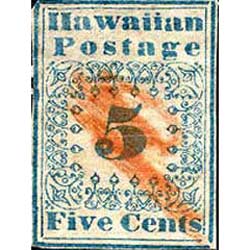
The Hawaii Missionary stamps are a series of postage stamps issued by the Kingdom of Hawaii in 1851. They are some of the rarest and most valuable stamps in the world, highly sought after by stamp collectors and enthusiasts. The rare Missionary stamps were the first and oldest stamps in Hawaii. They were used by the American missionaries who came to the islands in the 19th century.
The stamps were issued to prepay postage on letters and other mail sent from Hawaii to the United States and other countries. A mint rare stamp or an unused set or of eight of the Hawaiian Missionary stamps has a rare stamp price costing up to $100,000.
The Hawaii Missionary stamps were printed using primitive methods, with same shade of blue on pelure paper, the design engraved onto a small copper plate and then transferred to paper using a hand-operated press. This process led to inconsistencies in the printing, resulting in variations in color, ink density, and damages of the stamps.
Today, only a few dozen examples of the Hawaii Missionary stamps are known to exist, and they are highly prized by collectors. They are considered a symbol of Hawaii’s unique history and culture, as well as a testament to the enduring appeal of stamp collecting as a hobby.
4.) British Guiana 1-cent Magenta Stamp (1856)
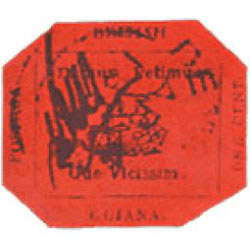
The British Guiana 1-cent magenta stamp is considered the most valuable stamp in the world, with a history dating back to 1856. It was issued in British Guiana (now known as Guyana), a British colony located in South America, to be used for the payment of local postage.
The stamp was originally printed as an emergency measure, as there was a shortage of postage stamps in the colony. It was printed in limited numbers, and only a few have survived to this day. The stamp features an image of a ship, with the colony’s name and the value of “1 cent” printed in the center.
The stamp is famous for its rarity and uniqueness, as there is only one known example in the world. It was discovered by a 12-year-old boy in British Guiana in 1873, and changed hands many times, the stamp was sold at an auction in 1970 for $280,000 then being sold to a wealthy collector in 1980 for a record-breaking price of $935,000.
The 2014 auction also made this stamp the most expensive item, by weight and size, ever sold in history. The stamp was next sold in June 2021 to London stamp dealer and publishing company Stanley Gibbons PLC for an amazing price of $8,307,000 because of its high value, several counterfeit stamps of the British Guyana stamps resurfaced through the years.
5.) The New Brunswick stamp “Connell’s Folly” stamps (1859)
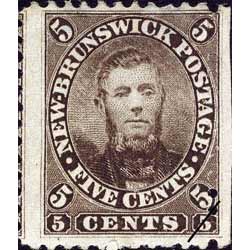
Postmaster General Charles Connell used his own portrait on the 5 cent stamp, the value most commonly used in the Canadian colony.
However, the public denounced Connell for his subtle political propaganda, because of this mistake, he was forced to resign from office and retire from public life.
This folly made this rare Canadian stamp controversial. For these tantamounting error, today these stamps are highly sought after by stamp collectors and even wealthy investors and are considered to be a rare and very valuable piece of Canadian postal history.
6.) The Ecuador, Honduras, Nicaragua, and El Salvador “Seebeck Reprints” stamps (1889-1899)
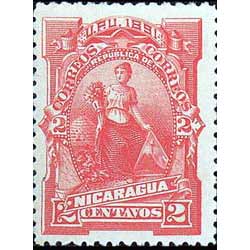
Nicholas F. Seebeck, a representative of the Hamilton Banknote Company in New York, contracted to print stamps for these nations at no charge, provided all unsold stamps were invalidated and returned to him.
He sold these rare collectible stamps and other postage stamps reprinted from the original plates to collectors at a fraction of their face value.
7.) The China “Special Delivery” Issue stamp (1913-1914)
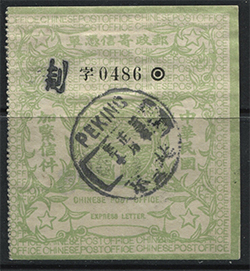
It is the world’s largest stamp, printed in strips with five different designs. This exclusive collectible and rare Chinese stamp measures 247mm by 65mm.
The rarest are the first 2 domestic express delivery stamp issues of the Republic of China with flying goose design.
The first Special Delivery stamp was issued in the late 1912. The background “Chinese Post Office” is in dark green plain letters. There is a 4 digit serial number followed by a dot in a circle, all in black, printed on each section of the stamp.
The second special deliver stamp was issued on Feb 1914. The background “Chinese Post Office” is light green letters. The serial number is 4 digits followed by a dot in a circle, all in green.
Today, these stamps are highly collectible and are considered to be rare and valuable. They are also recognized for their unique and beautiful design, which is emblematic of Chinese culture and history.
8.) The U.S. “Inverted Airmail” postage stamp (1918)
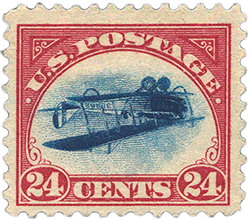
The U.S. “Inverted Jenny” postage stamp is one of the most famous and valuable stamps in American philatelic history. It was issued in 1918, during a time when the U.S. Post Office Department was experimenting with airmail delivery. The face value of this highly valuable stamp is 24 cents. The stamp features an image of a Curtiss JN-4 biplane, which was commonly referred to as the “Jenny” at the time.
The error that makes the “Inverted Jenny” so famous is that a small number of the stamps were printed with the image of the airplane upside down. This occurred due to a mistake during the printing process, and the stamps were quickly withdrawn from circulation. However, a few examples of the error stamps were sold to collectors and have since become extremely valuable.
Today, the “Inverted Jenny” is considered one of the most valuable U.S. postage stamps. In 2016, it was sold for over $1.35 million at auction.
9.) The U.S. “Dag Hammarskjold Error” stamps (1962)
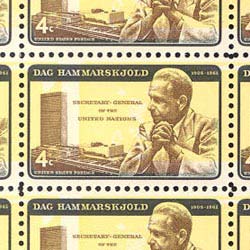
Two collectors, one in New Jersey and one in Ohio, each bought a sheet of this commemorative, which had the yellow background inverted.
On discovering the existence of the error, the Post Office Dept. reissued the stamp with the error and eliminated the premium value of the original sheets.
These rare postage stamps are also called the Day’s Follies after Postmaster Edward Day.
10.) The U.S. “Farley’s Follies” stamps (1935)
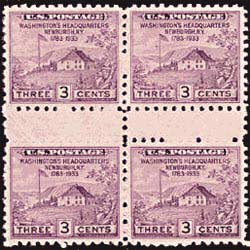
Postmaster General James A. Farley favored selected friends and VIPs, especially President Franklin D. Roosevelt, by giving them ungummed and unperforated sheets of certain commemorative stamps.
After strong and continued protests from American rare stamp collectors, the government was forced to reissue the postage stamps in an ungummed and imperforated form, and make them available to the general public.
11.) Treskilling Yellow stamp (1855)
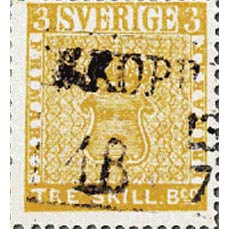
This is perhaps the most expensive stamp in the world as of the year 1996. Its rare stamp value is estimated around $2.5 million Swiss Francs.
The regular issues of the three skilling (triskilling) definitive stamps are colored green. However, this very rare treskilling stamp was mistakenly printed in yellow.
There is only one specimen of the treskilling error postage stamp which a schoolboy accidentally found in old attic.
12.) Perot Provisional stamps (1848)
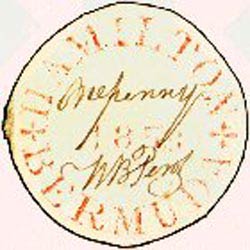
These exclusive rare postage stamps were known to be the first stamps of Bermuda. With rare postage stamp price of a stunning $ 105, 000, it only had a face value worth 1 penny.
The Perot Provisonal Stamps are the first printed stamps of Bermuda. In 1848, the town of Hamilton was incorporated as the Capital of Bermuda, and these stamps were printed under Postmaster William Bennet Perot. He wrote the words “1 penny” above the year stamp and signed his name below.
The Stamp reads ‘Hamilton’ across the top and ‘Bermuda’ across the bottom in a black inscription. Words “1 penny” are seen in the centre above with the year of the stamp and Perot’s signature below it.
Today, only 11 copies of the Perot Stamps have been found. For the most part, these stamps are owned today by European royalty including Queen Elizabeth herself.
13.) Red Mercury Stamp (1856)
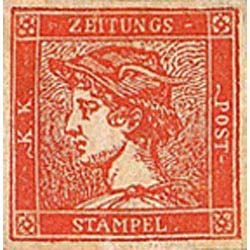
This is the rarest Austrian newspaper stamp and it was created as postage on newspapers.
The Mercury stamps depicted the image of the Roman god, and were printed in blue, yellow, and red.
The Red Mercury stamps were printed in 1856 but were replaced too soon in 1858. Few copies of very rare stamps have a rare stamp value of $ 40, 000.
14.) Benjamin Franklin Z-Grill stamp (1868)
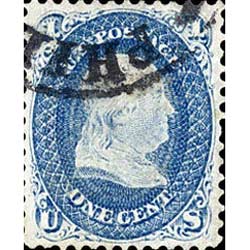
This famous rare, unique stamp has tiny squares embossed onto the back of the stamp to absorb the ink.
This is to prevent the cancellation marks from washing out and thus making the postage stamps protected from counterfeiting.
The Z Grill stamps are in the list of the rarest American stamps for there are only two surviving copies. Its rare stamp value is around $2.97 million.
15.) Woodblock stamps (1861)
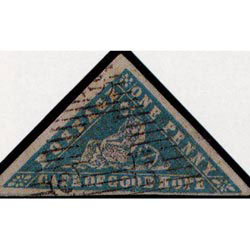
The rarest error in Cape of Good Hope stamps was printed in blue. Rare blue Woodblock stamp was printed by Perkins, Bacon & Co. The design of this rare Cape of Good Hope stamp is a lone female figure sitting on an anchor.
Two known specimens of famous error Woodblock stamp designs exist. These rare valuable stamps are 4 Penny stamp printed in vermillion, and the 1 penny stamp printed in blue.
16.) Inverted Swan stamp (1855)
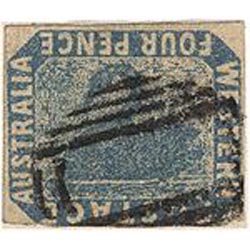
Came to be known as one of the world’s first frame invert error stamps, this rare Australian stamp has an upside-down swan design.
The Black Swan is the symbol for the Australian continent.There was about 388 error Australian Black Swan stamps.
Today, only 15 mint rare postage stamps survived. Its rare stamp price is estimated around US$ 60, 000.
17.) Basel Dove stamp (1845)
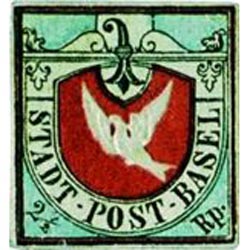
Issued in the Canton of Basel in Switzerland, the world’s first tri-color stamp has an approximate rare stamp value of CHF 18, 000.
The extremely rare Basel Dove was designed by Melchoir Berry. But the blue-crimson-black color scheme of the Basel Dove stamp was not well accepted by the public so it was later on withdrawn.
These rare Swiss stamps are one of the most beautiful classical stamps.
18.) Cottonreel stamps (1850)
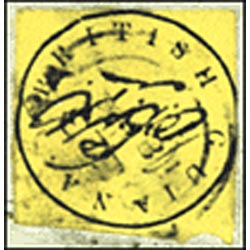
The first British Guiana stamps were locally produced until the official postage stamps arrived from London in the year 1852.
These rare and famous stamps, also known as the Cottonreels, resembled the circular labels on cotton spools.
A single British Guiana Cottonreel stamp has a rare stamp worth of 4, 000 – 20, 000 pounds sterling depending on the condition.
19.) Scinde Dawk stamp (1852)
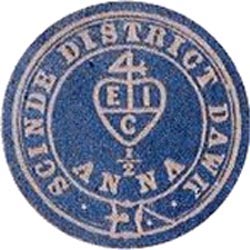
The Dawk, or Dak, is an old postal service in Asia that is carried by runners. The Dak postage rate was based on the weight and distance the parcel was to be delivered.
Sir Bartle Frefre of the East India Company created a postal system that has a flat rate for all distances, and he employed a stamp embossed with seal wax.
These rare British stamps carry the Merchant’s Mark of East India Company. India’s first prepaid postage stamps are available for £1,000.00 a piece.
20.) Inverted Head Four Annas stamp (1854)
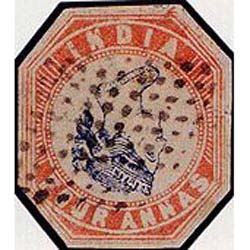
This famous Indian stamp is actually a highly valuable error stamp created using a blue and white dye. The Inverted Head Four Annas of India is a postage stamp prized by collectors. The 1854 first issues of India included a Four Annas value in red and blue. It was one of the world’s first multicolored stamps
This rareIndian stamp was printed with an upside-down effigy. The error appears not to have been discovered until many years after the stamps were issued. None of the 1870s publications mentions the Inverted Head Four Annas.
21.) Uganda Cowries stamps (1895)
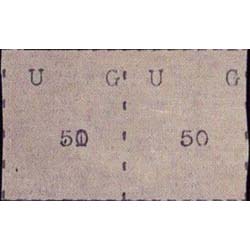
These first Ugandan stamps were also known by the name of Uganda Missionaries. The Uganda Cowries were the first stamps produced in the country of Uganda. Cowries is the unit of currency there, and actually means seashells.
Since there were no printing presses in Uganda at that time, the first stamps of Uganda were produced on a typewriter.
Unlike other stamps, the Uganda Cowries simply has an intial of the jurisdiction and the value of the stamp. These high value stamps have an estimated philatelic value of £2,000.00 per pair.
22.) Bluenose stamp (1929)
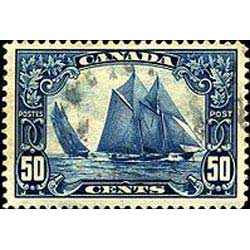
Regarded as the most beautiful and rare Canadian stamp, it was printed by the Canadian Bank Note Company to depict the Bluenose, a schooner (racing ship) from Nova Scotia. The rare Bluenose is a 50-cent stamp issued by Canada on January 8, 1929, as a high value in the King George V “Scroll” issue.
The stamp has rich blue color and high quality of engraving. It is considered by stamp collectors to be the most beautiful Canadian stamp. This most favorite classic Canadian stamp has an estimated rare postal stamps value around CAN $700.
23.) Gronchi Rosa stamps (1961)
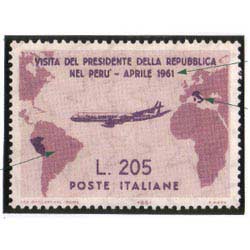
With a rare stamp value pegged at £890 Euros, the famous Italian stamp misprint was known to philatelists as the Gronchi Rosa stamps.
This extremely rare Italian postage stamp design error was issued for the voyage of President Giovanno Gronchi to three South American nations.
The 205 liras rosa stamp was meant for the Peru stopover but the artist made a mistake when he drew the Peru-Ecuador boundaries.
These rare Italian stamps were quickly replaced with the correct issues.